
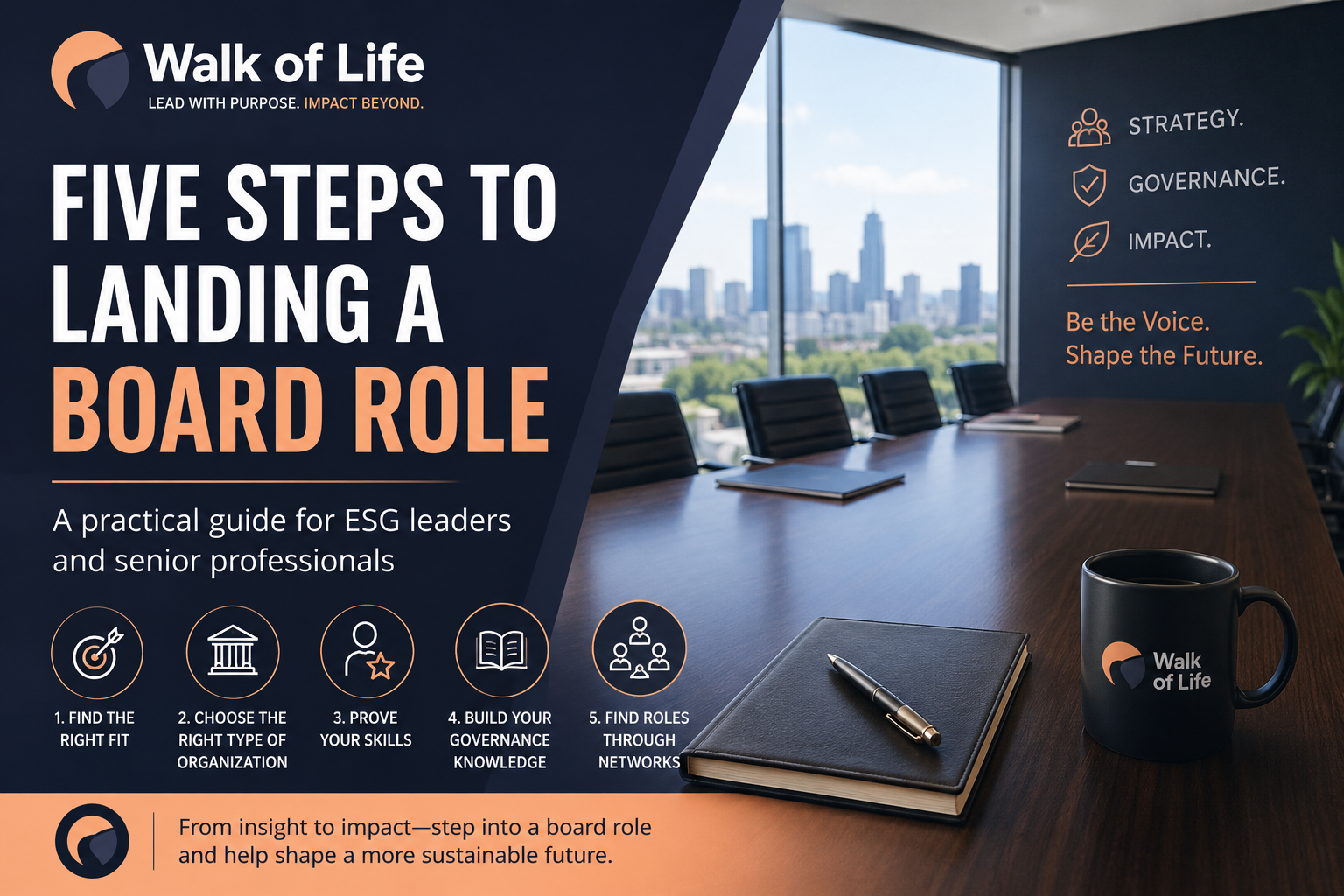
As Environmental, Social and Governance (ESG) priorities continue to shape business strategy, organisations across the globe are actively seeking experienced professionals to strengthen their boards. For senior leaders with expertise in sustainability, governance or social impact, there has never been a better time to pursue a board position.
Serving on a board is more than a prestigious career milestone. It provides access to influential decision-makers, expands your professional network, enhances your leadership profile, and offers an opportunity to shape long-term organisational strategy. Whether you're looking to broaden your executive experience or create meaningful impact, a board role can be an incredibly rewarding next step.
However, joining a board also comes with significant responsibility. Before beginning your search, it's important to understand what type of role aligns with your expertise, career goals and availability.
Step 1: Identify the Right Board for Your Experience
Not every board operates in the same way. Understanding the different board structures will help you target opportunities that match your strengths.
Executive (Managing) Board
Executive boards oversee the organisation's daily operations and are directly involved in executing business strategy. Members are typically senior executives responsible for operational performance and future growth.
Advisory Board
Advisory boards provide strategic guidance without having formal governance responsibilities. They are often composed of external experts who offer specialised knowledge in areas such as sustainability, digital transformation, finance or ESG.
Governing Board
A governing board is responsible for setting the organisation's strategic direction and ensuring effective oversight. Rather than managing day-to-day operations, members focus on long-term planning, governance, risk management and executive accountability.
Many organisations combine these structures depending on their size and governance model.
Within each board, you'll typically find both executive directors and non-executive directors.
- Executive Directors are senior leaders employed by the organisation, such as CEOs, CFOs and increasingly Chief Sustainability Officers (CSOs).
- Non-Executive Directors (NEDs) are independent professionals appointed for their external expertise, industry knowledge and strategic perspective.
Non-executive positions are particularly attractive for experienced ESG professionals who can bring objective insights to board discussions.
Step 2: Decide Which Type of Organisation Fits Your Goals
The responsibilities of board members vary significantly between corporate businesses and non-profit organisations.
Corporate Boards
Corporate boards are accountable to shareholders and focus on driving business performance, managing risk and delivering long-term value.
These boards are generally smaller, often consisting of 10 to 15 members, with directors expected to attend regular meetings and actively participate in strategic decision-making. Most corporate board roles are paid positions.
Non-Profit Boards
Non-profit boards exist to support an organisation's mission and serve its wider community rather than shareholders.
These boards are often larger, allowing responsibilities to be shared among volunteers. Meetings may occur less frequently and are usually scheduled around organisational priorities. Many industry associations, charities and professional bodies operate under this model.
Before pursuing opportunities, ask yourself:
- Am I looking to expand my leadership responsibilities within my current organisation?
- Do I want broader cross-sector board experience?
- What specialist ESG expertise can I contribute?
- Am I better suited to operational guidance or long-term strategic oversight?
- Do I want a role focused primarily on sustainability or broader governance responsibilities?
- How much time can I realistically commit?
- Is financial compensation important to me?
Expert Insight
"Be thoughtful and deliberate about what you are looking for and why. Is it a passion project or are you looking to strengthen your credentials? Consider what you want to accomplish—for yourself and for the organisation."
— Lisa Raisner
Principal, Navigating Washington LLP
President, Center City Business Association
Step 3: Demonstrate the Skills Boards Need
Although ESG expertise is increasingly sought after, board appointments remain highly competitive. Organisations look for professionals who combine subject matter knowledge with strong governance and strategic capabilities.
Successful board members typically demonstrate:
ESG and Industry Expertise
Boards rely on members who can provide informed perspectives on emerging trends, regulations and best practices.
Financial Literacy
Directors should be comfortable interpreting financial statements, understanding budgets, evaluating cash flow and asking informed questions about organisational performance.
Strategic Thinking
Board discussions focus on long-term objectives rather than daily operations. Members must be able to assess risks, identify opportunities and contribute to sustainable growth.
Governance Knowledge
A solid understanding of corporate governance is essential. Directors oversee organisational structures, ensure accountability, monitor compliance and support effective decision-making.
Fundraising and Relationship Building
Particularly within non-profit organisations, board members often play an active role in fundraising by introducing contacts, strengthening partnerships and representing the organisation externally.
Expert Insight
"To get the most from a board role, fully engage. Join committees, build relationships with executives, represent the organisation publicly and contribute to fundraising efforts. The deeper your involvement, the greater the value you can create."
— Tim Mohin
Partner & Director, Boston Consulting Group
Former CEO, GRI
Step 4: Build Your Boardroom Knowledge
Even experienced executives can benefit from formal board training before pursuing appointments.
Understanding governance frameworks, fiduciary responsibilities, legal obligations and board dynamics will help you contribute effectively from day one.
Many leading universities and governance institutions offer executive education programmes specifically designed for aspiring directors.
Popular options include:
- Boards That Lead – Wharton School, University of Pennsylvania
- Diploma in Corporate Governance – Corporate Governance Institute
- Directors and Board Skills Training – The Knowledge Academy
- Board Leadership Program – Corporate Board Member Network
- Women on Boards: Succeeding as a Corporate Director – Harvard Business School
- Board Director Programme – Financial Times
These programmes not only strengthen your knowledge but also enhance your credibility with recruiters and nomination committees.
Step 5: Leverage Your Network to Find Opportunities
Many board appointments are made through professional networks rather than public job advertisements.
Begin by speaking with colleagues, mentors and industry leaders about your interest in serving on a board. You should also connect with executive search firms that specialise in board recruitment.
If you're seeking your first appointment, smaller charities, non-profits or mission-driven organisations can provide valuable board experience while allowing you to contribute to causes you're passionate about.
Several organisations also offer networking, mentoring and board readiness programmes, including:
- Women on Boards
- Corporate Governance Institute
- Board Network
- Tapestry Networks – Lead Director Network
- Institute of Directors
Expert Insight
"Networking is essential when evaluating board opportunities. Understand your strengths, conduct thorough due diligence on the organisation and ensure you'll be working alongside people whose values and leadership style align with your own."
— Sean Ansett
Board Chair, Stake Advisors
Creating Impact Beyond Your Executive Role
Demand for experienced ESG professionals at board level continues to grow as organisations strengthen their commitment to responsible business practices.
A board appointment not only enhances your professional credibility but also gives you the opportunity to influence strategic decisions that shape businesses, communities and industries for years to come.
Whether serving a multinational corporation, a purpose-driven enterprise or a non-profit organisation, board members play a critical role in guiding long-term success, promoting accountability and driving meaningful change.
For experienced leaders looking to extend their influence beyond day-to-day management, securing a board position can be one of the most impactful steps in their leadership journey.